
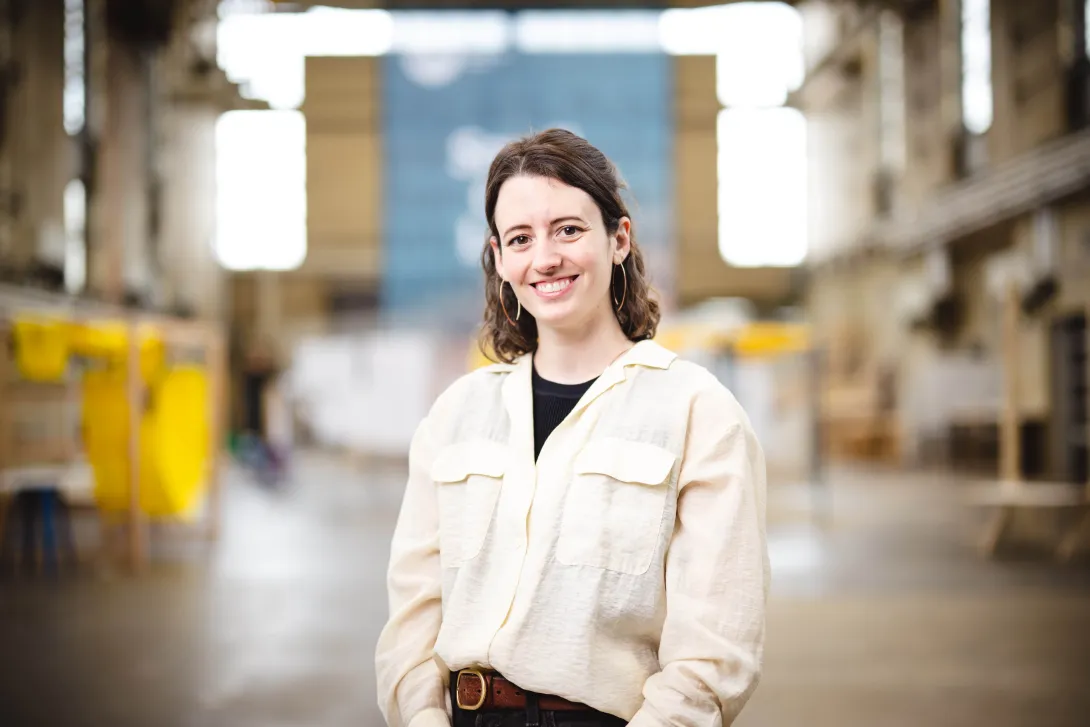
Summer is just around the corner and cities across the Lehigh Valley are expecting to feel the heat. In a course in the Department of Art, Architecture, and Design and in collaboration with the Small Cities Lab (SCL) students conduct research projects focused on urban heat mitigation and climate resilience in Allentown.
Led by Lauren Scott, SCL researcher and scholar, the research in the first half of the semester was divided into three main groups: one focusing on identifying vulnerable populations and public education, another on Geographic Information System (GIS) mapping to identify demographic vulnerabilities, and the third on designing scalable and adaptable systems for urban environments. The second half of the course focused on developing designs for simple, deployable interventions. Some were recently submitted to the Love Your Block grant program and presented at a community meeting.
Speaking to the unique nature of the Lehigh Valley, Scott remarks, “It's really quite a unique and wonderful conglomeration of small cities that can share resources and leverage that proximity and similar conditions.” Allentown, Bethlehem, and Easton make up the largest portions of the Lehigh Valley. Lehigh University sits in the middle of this triangle making the Small Cities Lab an ideal location to develop community-facing, action-oriented research and projects focused on contemporary urban change in American cities with populations under 250,000. The lab partners with local leaders, businesses, and initiatives to bridge the gap between academia and the community.
Local city leaders were invited to the student’s mid-capstone review and were impressed with their work. From fans to benches to shade installations, city leaders emphasized the importance of tangible, accessible designs so decision makers and community members can see themselves and their constituents in the solutions.
Scott has focused on participatory design in the course which aims to make architectural solutions accessible to non-specialists and encourages spatial autonomy. “Seeing the students learn how to problem solve in real time and adapt the design as they go, as they build it, and also take on ownership,” has been a wonderful teaching tool and feedback loop, she remarks.
“I hope that we get a chance to kind of create prototypes in the second half of the semester where we can test some of these ideas out,” she says.
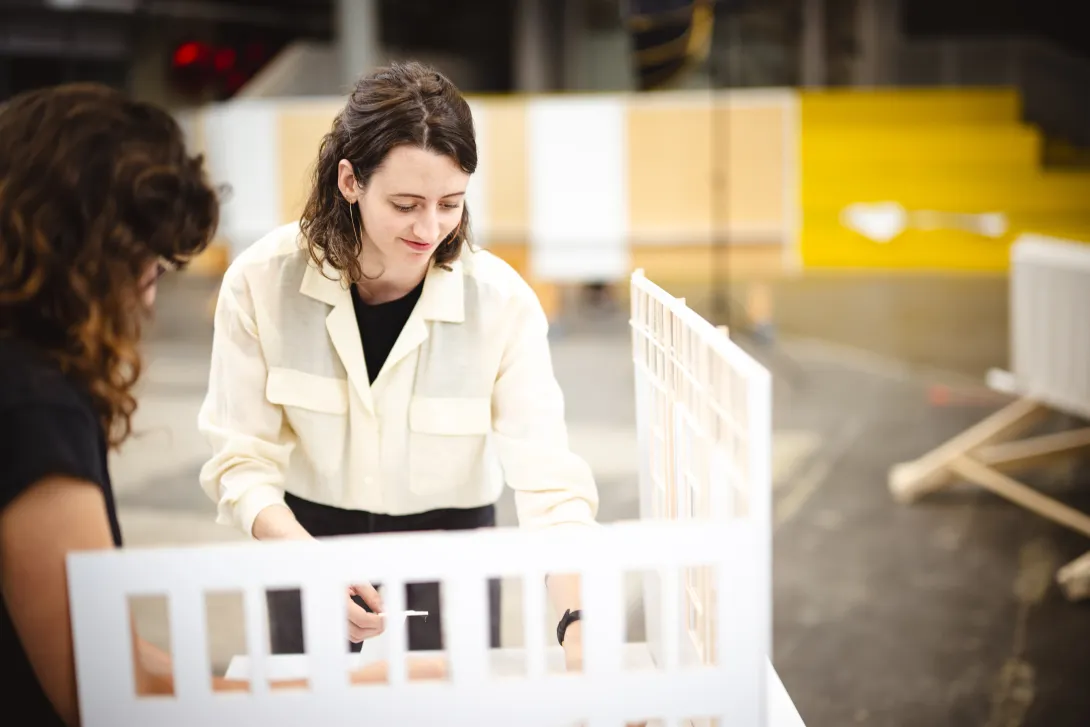
The foundation of this work began with Karen Beck Pooley’s research on urban heat in the region which proved this issue really needs attention and Allentown as a poignant case study. While there has been a lot of research on climate change in the past two decades, heat, especially extreme heat, tends to fly under the radar, Scott notes, even though it kills more people than several types of disasters combined, referring to recent research on the subject.
The public facing work of the course has two goals: share the research and design process; and create materials detailing how their designs could be replicated in similar small cities across the region or country that might benefit from these interventions. Using Allentown as a case study, the students will create instructional drawings on how to deploy their ideas.
The SCL is multidisciplinary by nature and this course is no different. There are students across public health, English and graphic design, Scott notes. “It's been a really interesting challenge because they're not all architects. But both in this research and other Small City Lab projects, it's been so important and so helpful and so critical to bring in folks from different disciplines to be a part of the work, lend expertise, and find overlap.”
Which makes sense—we all can feel the rising heat and we need an interdisciplinary team of students, researchers, faculty, and local leaders to make these cool solutions a reality.